Beyond the cards
In court
Israel told its High Court of Justice that families could now get information through the Red Cross. The court struck out HaMoked’s petitions without deciding the question they raised, HaMoked reports.
“On August 21, 2026, the State submitted its response to HaMoked’s petitions and asked that they be deleted,” HaMoked writes. “It argued that the petitioners’ individual cases had been resolved, while the broader issue had already been addressed in the ICRC judgment.” Israel added, HaMoked says, “that it had provided the ICRC with a list of Palestinian prisoners and their places of detention,” and “further argued that families could now obtain information about their detained relatives through the ICRC.”
“The Court consolidated three such petitions, concerning Gaza residents arrested in July 2024, to consider the principled question raised by HaMoked: whether, and in what way, the State is obliged to provide information about the whereabouts of a person held under the UCL Law.” UCL is the “Unlawful Combatants” Law.
“On October 12, 2026, the Court ordered that the petitions be deleted,” without deciding on the principled question at their base, HaMoked reports. The court listed several circumstances that, in its view, made it unnecessary to consider the petitions in their current form: the resolution of the individual cases, the ICRC judgment, and “an overall decline in the number of Gaza detainees.”
In its judgment, HaMoked says, the court criticized the State’s failure to present a reasoned position on its duty towards detainees from the Gaza Strip: “Unfortunately, the State did not take up the challenge, preferring not to address the legal question – regrettably so.” The words are the court’s, in HaMoked’s English translation; the Hebrew judgment was not found.
Names, but no visits
After Oct. 7, 2023, Israel stopped giving the Red Cross information about Palestinian prisoners, HaMoked says. In June 2026, Israel’s High Court of Justice ordered it to resume.
“Since October 7, 2023, the State has stopped providing information about Palestinian prisoners to the International Committee of the Red Cross (ICRC), as it had regularly done until then,” HaMoked writes. “On June 3, 2026, the Court issued a judgment ordering the State to resume cooperation with the ICRC.”
The Times of Israel reported on Oct. 25: “In June 2026, the High Court ruled in favor of the petition. However, the ICRC confirmed to The Times of Israel that prison visits have not yet resumed.” The Red Cross told the paper: “We hope to be able to resume the visits soon, but that has not yet happened.” An ICRC spokesperson, Gilad Grossman, told the Associated Press: “we hope that we will resume in the near future.”
On Sept. 9, 2026, the ICRC reported that a team had met authorities at an Israeli military detention facility as part of efforts to reinstate access. “The team neither met nor had direct contact with any detainees,” it wrote.
Still missing
More than 7,000 people are missing in Gaza, by the estimate of the Palestinian Center for the Missing and Forcibly Disappeared.
In its statement of Oct. 25, 2026, in Arabic, the center says that of them, it suspects 2,500 to 3,000 were forcibly disappeared after their arrest from homes, hospitals, shelters, military checkpoints and border areas.
The Times of Israel wrote that Israel had given the Red Cross “complete information about Gazan detainees held in Israel.” The center calls the list incomplete.
Under the “Unlawful Combatants” Law
Under Israel’s “Unlawful Combatants” Law, HaMoked says, detainees may be held for weeks before they see a judge or a lawyer.
According to HaMoked, “these detainees may currently be held for 33 days without being brought before a judge and for 21 days without the State allowing them to meet with a lawyer.” The periods have changed over 2026; no second source for the current figures was found.
“As of October 2026, despite the formal ceasefire in the Gaza Strip, 1,419 people are held in Israeli prisons under the UCL Law,” HaMoked writes.
PCATI, an Israeli anti-torture organization, said in June 2026 that emergency restrictions under the law had been applied to “more than 6,000 detainees, primarily residents of Gaza, more than 40% of whom were ultimately released without charge.”
Found alive, May 2026
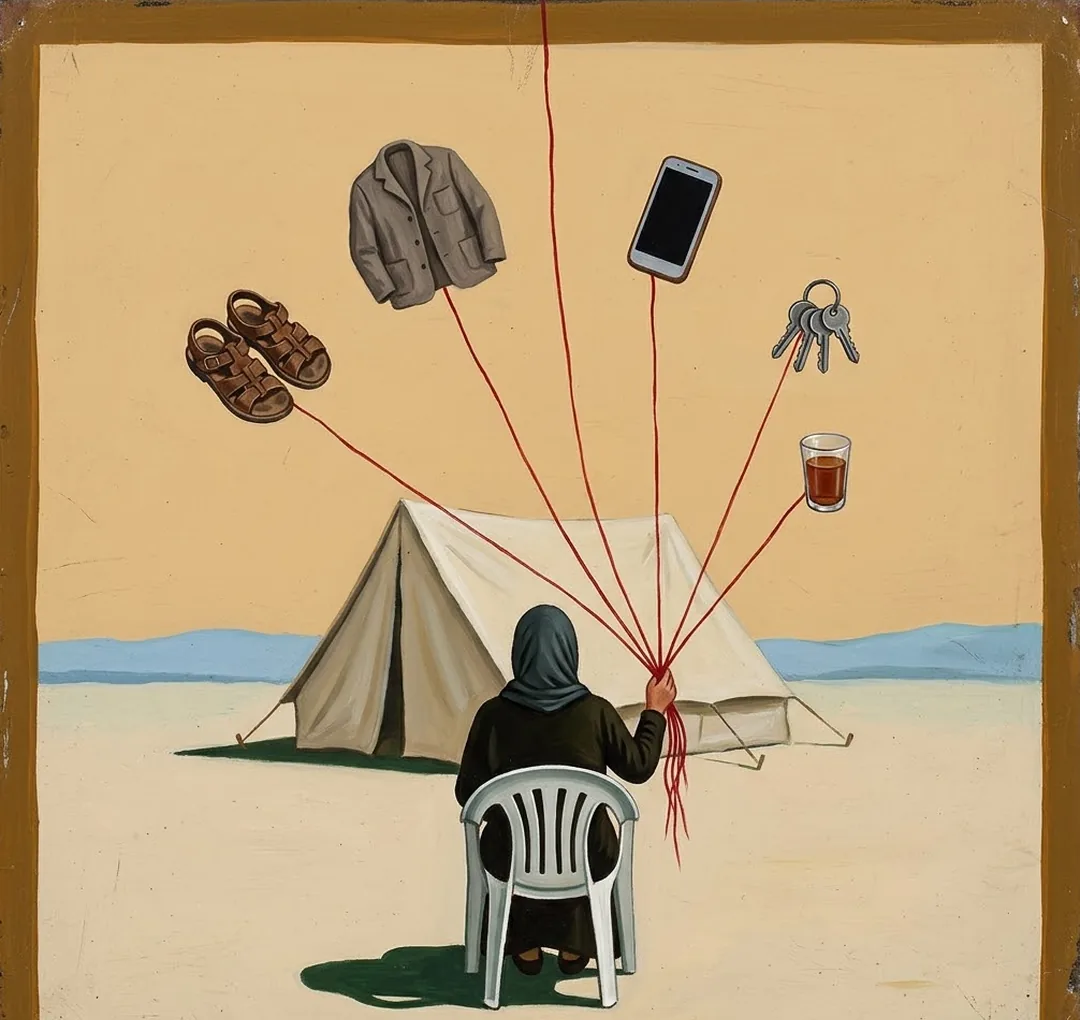
In May 2026, months before the Red Cross received Israel’s list, Al Jazeera English reported on a Gaza family that had mourned a son for a year and a half.
“For 18 months, the family of Eid Nael Abu Shaar, aged 25, a Palestinian man from Gaza, believed this eldest son was dead,” Al Jazeera English wrote on May 8, 2026, in a report by Mohammad Mansour and Mohammed Shaheen. “Eid went missing on December 15, 2024, while looking for work to support his family.”
The family reached out to the International Committee of the Red Cross and human rights groups, “but time after time, they reached a dead end,” the report says. Then an unexpected phone call from a lawyer confirmed he was alive and being held in Israel’s Ofer Prison.
No later report on him was found as of Oct. 31, 2026.